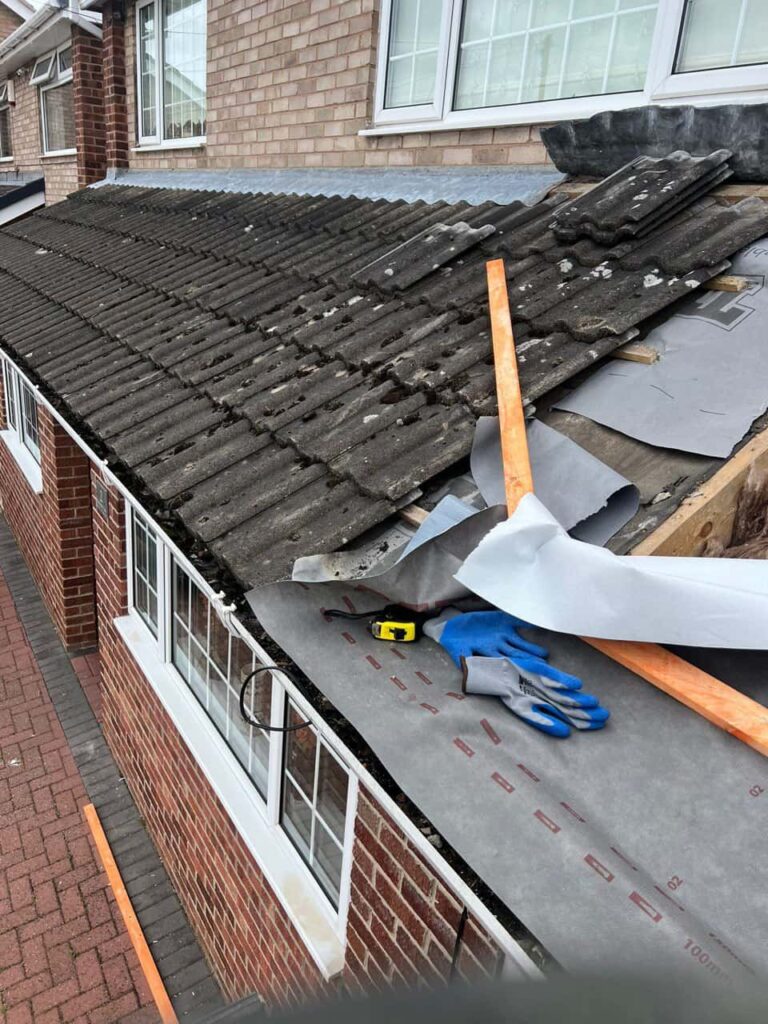
Few roofing problems are more frustrating than seeing water return after a previous repair. Once a leak has been addressed, it is reasonable to expect the affected area to remain dry. However, when damp staining reappears or water begins entering during heavy rainfall, it does not automatically mean that the earlier repair has failed.
Roof leaks can be deceptive. Water may enter through one part of the roof before travelling beneath tiles, along underlay or across structural components and becoming visible somewhere else. In other cases, the original repair remains sound while an adjoining section of ageing roofing develops a new weakness.
For homeowners in Willenhall, Staffordshire, understanding why a roof leak has returned is important before authorising another repair. The priority should be to identify the current route of water ingress rather than assuming that the previous problem has simply reopened.
Why Can a Roof Start Leaking Again After It Has Already Been Repaired?
A recurring leak needs to be approached as a fresh diagnostic problem. Previous repairs provide useful information, but the current source of water still needs to be established.
Sometimes an earlier repair did not address the true cause. In other situations, it successfully resolved the original defect but deterioration has since developed elsewhere. If a roof has several ageing components, repeated water ingress can also indicate that the problem is becoming broader than one isolated weakness.
The Original Repair May Still Be Completely Sound
When dampness returns in approximately the same internal location, homeowners naturally tend to suspect the previous repair.
However, the repaired area may still be performing correctly.
Water entering further up a pitched roof can travel beneath the covering before reaching the interior. A new defect can therefore produce dampness close to an old leak even though the two problems have different external causes.
This is why previous repair areas should be inspected, but they should not automatically be assumed to be responsible.
The Original Source May Have Been Misidentified
Finding the true source of a roof leak is not always straightforward.
The internal position of a ceiling stain does not necessarily correspond with the external entry point. Water can travel considerable distances before it becomes visible, particularly on pitched roofs with several junctions and concealed layers.
If an earlier repair concentrated on the area directly above the visible dampness without confirming how water was entering, the actual weakness may have remained untreated.
A professional inspection should therefore trace the likely route of moisture rather than simply focus on the previous repair.
Another Roofing Component May Have Deteriorated
A roof is made up of several components that work together to provide weather protection.
Tiles or slates, flashing, valleys, ridges, verges and junctions can all deteriorate at different rates. Correcting one component does not prevent another ageing area from developing a problem later.
For example, a previous tile repair may remain perfectly secure while deterioration develops around nearby flashing.
Where leaks recur, assessing the surrounding roof provides a clearer picture than repeatedly concentrating on one historic defect.
Water Can Travel Before It Becomes Visible
One of the main reasons recurring roof leaks are difficult to diagnose is the way water behaves after penetrating the outer covering.
Moisture does not necessarily fall vertically into the room below. It can follow roof timbers, underlay and other surfaces before reaching a point where it becomes visible.
This means a stain can appear several times in the same location even when water has entered through different external weaknesses.
The visible damp patch should therefore be treated as evidence of water ingress, not as a precise map of where the roof requires repair.
Certain Leaks Only Appear During Particular Weather Conditions
Some roofing weaknesses become noticeable only when rainfall arrives from a particular direction.
Ordinary rainfall may be shed successfully, while wind-driven rain reaches a vulnerable junction, displaced tile or deteriorating flashing detail from a different angle. Prolonged rainfall can also expose weaknesses that remain unnoticed during short showers.
This can make a recurring leak appear unpredictable.
Noting when the leak occurs can provide valuable information during an inspection and help determine which parts of the roof require closer attention.
A Small Defect May Have Developed Beside the Previous Repair
A properly repaired section can sometimes remain stronger than the ageing materials around it.
As surrounding roofing continues to weather, a new weakness may develop immediately beside the repair. From inside the property, the resulting water ingress may look almost identical to the original problem.
This situation becomes more common when the existing roof has several areas approaching a similar stage of deterioration.
Inspecting both the repair and neighbouring materials helps establish whether the latest leak represents a new localised defect.
Flashing Can Be Responsible for Persistent Water Ingress
Flashing protects vulnerable roof junctions where different materials or surfaces meet.
If flashing becomes displaced, cracked or otherwise unable to perform effectively, water can penetrate through relatively small openings. These defects are not always obvious from ground level and can sometimes produce intermittent leaks rather than constant water ingress.
Where previous repairs have concentrated primarily on tiles or slates, nearby flashing should also be considered.
A successful repair depends on identifying the component actually allowing water through.
Valleys Can Create Difficult-to-Trace Leaks
Roof valleys carry significant volumes of rainwater because they collect water from adjoining slopes.
Deterioration within a valley or the surrounding roofing can therefore cause leaks that become particularly noticeable during prolonged rainfall. Water may also travel away from the original defect before appearing internally.
Repeated problems around a valley should be assessed as a complete detail rather than treated as a series of unrelated surface defects.
This allows the condition of the valley and adjoining roofing materials to be considered together.
Previous Temporary Repairs May No Longer Be Performing
Not every historic roof repair was necessarily intended to provide the same type of long-term solution.
A roof may contain old patches, sealants or other localised treatments applied at different times. As these areas weather, they can become less dependable.
Adding another layer of repair material without understanding the construction underneath can make future diagnosis more difficult.
Where several historic interventions are present, it can be useful to establish which repairs remain sound and which areas require a more appropriate reconstruction. Poor or repeated repairs can sometimes obscure the original cause of water ingress rather than resolving it.
Recurring Leaks Can Indicate Wider Roof Deterioration
One returning leak does not automatically mean that the whole roof is deteriorating.
However, the situation deserves broader consideration when leaks occur repeatedly in different areas, roofing materials are visibly deteriorating or new problems continue appearing after successful local repairs.
At this stage, treating each defect independently may provide an incomplete picture.
A whole-roof assessment can establish whether there is one difficult localised problem or whether several components are beginning to decline together.
Repeated Repairs Should Be Considered as a Pattern
The history of a roof can provide useful diagnostic information.
An occasional repair is normal and does not necessarily indicate poor overall condition. The significance changes when a roof requires attention increasingly frequently.
If previous repairs remain sound but new defects continually appear elsewhere, the problem may be the condition of the remaining original roofing rather than any individual repair.
Looking at the pattern of work over time can therefore help determine whether another targeted repair remains appropriate.
Why Simply Repairing the Same Area Again Can Be a Mistake
When water returns, repeating the previous repair may seem like the obvious response.
However, doing so without confirming the current source can result in work being carried out on a section that is already sound. The actual entry point may then remain untouched.
A better approach is to begin again with diagnosis.
The previous repair should be examined, but so should the surrounding roof, relevant junctions and other possible routes of water ingress.
When Is Another Localised Repair Appropriate?
Recurring water ingress does not automatically mean extensive roofing work is necessary.
A professional inspection may identify a new but clearly localised defect within a roof that otherwise remains in dependable condition. In that situation, targeted repair can still be an appropriate solution.
The important distinction is whether the defect is genuinely isolated.
Confirming the wider roof remains sound provides greater confidence that repairing the identified weakness will restore reliable weather protection.
When Should the Wider Roof Be Investigated?
A more comprehensive assessment becomes valuable when there are signs that the problem extends beyond one repair area.
This may include recurring leaks in different locations, several previous repairs, deteriorating tiles or slates, weaknesses across multiple roof details, or water ingress that continues despite apparently successful local work.
The purpose of assessing the wider roof is not to assume that extensive work is required. It is to understand whether individual defects are connected before deciding what should be repaired.
Accurate Leak Detection Helps Avoid Treating the Wrong Problem
The quality of a roof repair depends heavily on the accuracy of the diagnosis that comes before it.
A visible internal stain confirms that moisture is reaching the property, but it does not identify precisely where the roof has failed. Examining the covering, junctions, previous repairs and surrounding materials helps build a more complete picture.
This approach reduces the risk of repeatedly treating symptoms while leaving the actual source of water ingress unresolved.
Professional Roof Leak Assessment in Willenhall
At Willenhall Roofing Repairs, we assess recurring roof leaks in Willenhall, Staffordshire, by considering both the current symptoms and the history of previous roofing work.
The objective is to determine whether an earlier repair has genuinely failed, a separate defect has developed or the roof is beginning to show a wider pattern of deterioration. This allows any recommended repair to be based on the present condition of the roof rather than assumptions about where the water is coming from.
Conclusion
When water returns after a previous roof repair, it does not necessarily mean that the original work has failed. The leak may originate from another part of the roof, surrounding materials may have deteriorated, or water may be travelling before becoming visible internally.
The most important step is therefore to identify the current source of water ingress before carrying out further repairs. Where problems are recurring, the surrounding roof should also be assessed to determine whether the latest leak is isolated or part of broader deterioration.
If your roof in Willenhall, Staffordshire, has started leaking again after previous repair work, contact Willenhall Roofing Repairs. We can assess the affected area and wider roof condition to identify the cause and determine an appropriate repair.
Call us on: 01902 951 897
Click here to find out more about Willenhall Roofing Repairs
Click here to complete our contact form and see how we can help with your roofing needs.